Japandi kitchen design in Dubai
Minimalism with warmth. Precision with calm. The Japandi kitchen is one of the most considered design directions of the decade, and for anyone planning a luxury kitchen in Dubai, it is worth understanding exactly why it works so well.
What is the Japandi style?
Japandi is a fusion of Japanese and Scandinavian design philosophies. Japanese interiors value silence, precision, and the beauty of restraint. Scandinavian interiors lean into warmth, natural materials, and a sense of ease at home. The two traditions share more than they differ on: both reject excess, both use natural materials honestly, and both put function and form on equal footing.
In the kitchen, this produces something rare: a space that feels genuinely calm without feeling cold. Clean lines that do not feel clinical. Wood and ceramic that feel luxurious without being loud. When it is done well, a Japandi kitchen in Dubai does not look like a trend. It looks like the result of very good decisions.
The role of natural materials
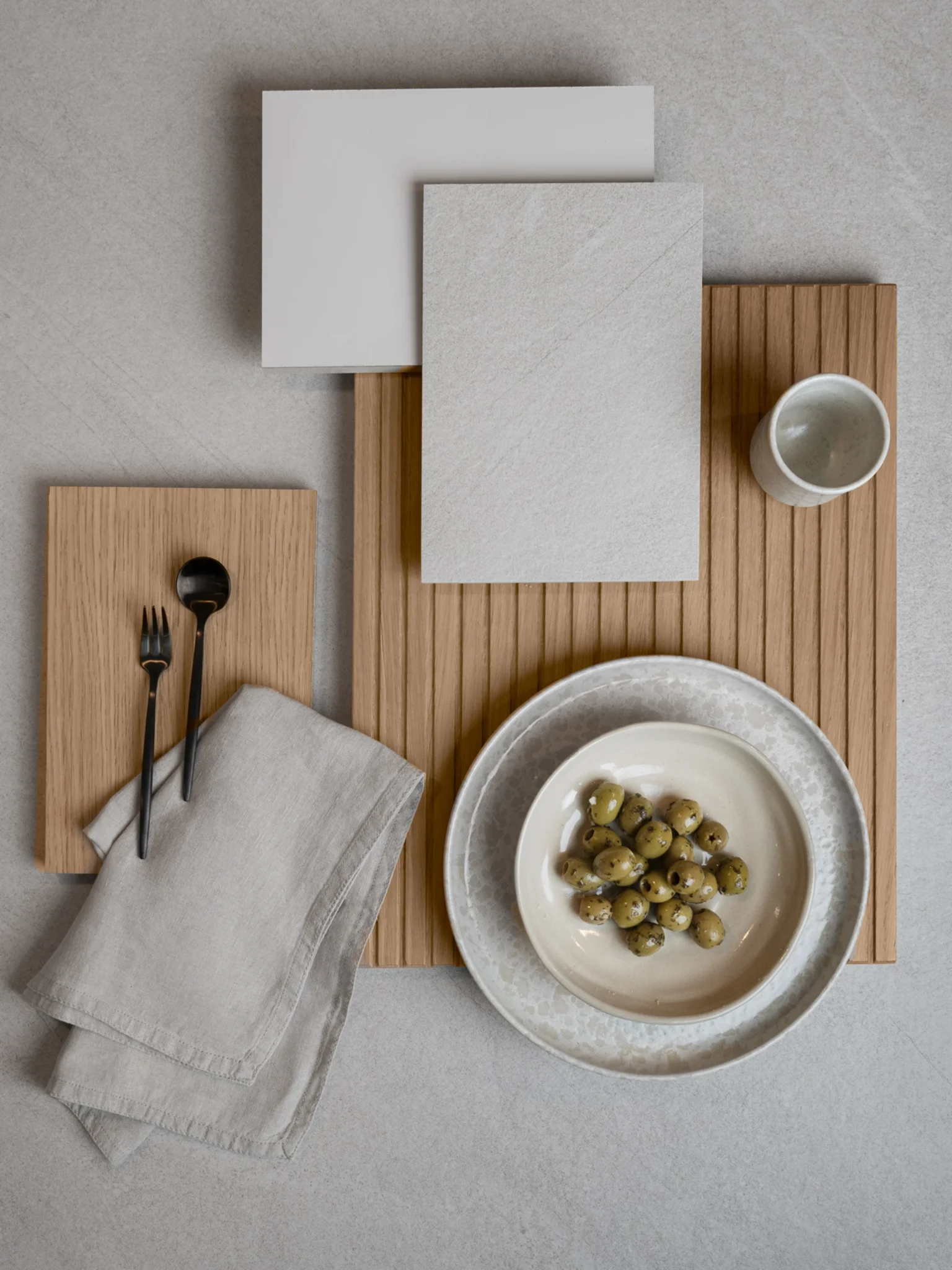
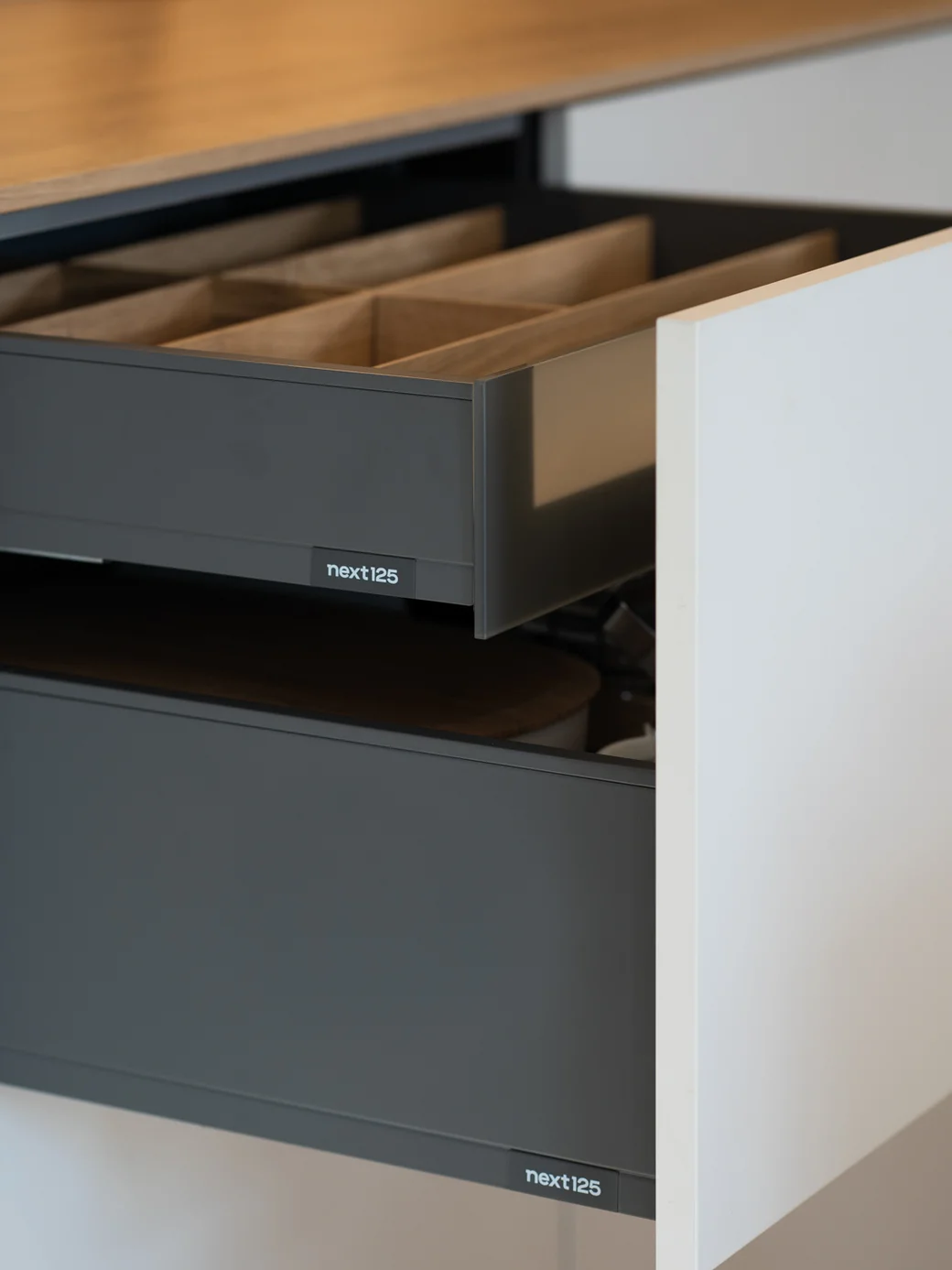
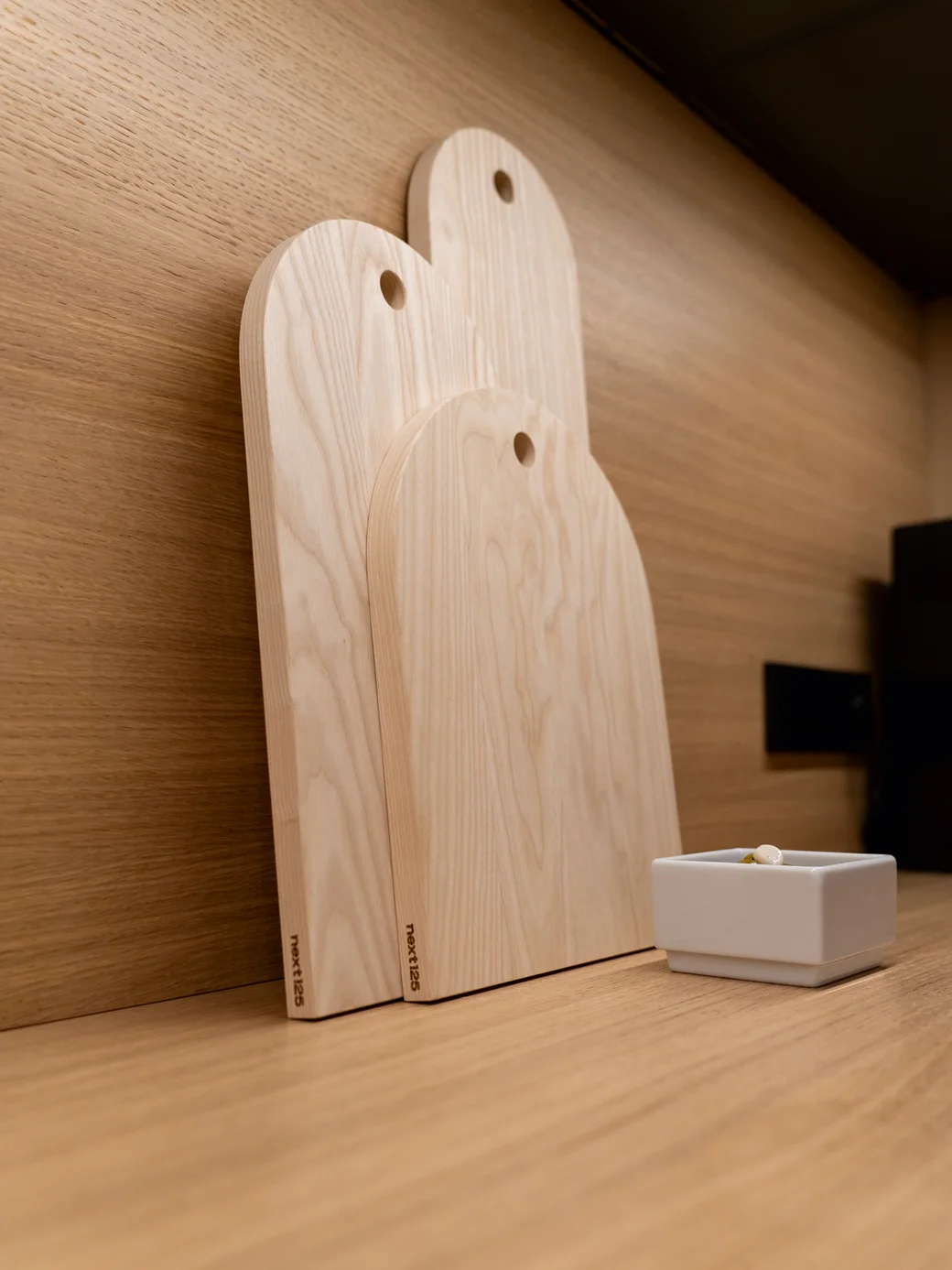
Japandi interiors live or die on the quality of the materials. Cheap wood veneer or flat-laminate surfaces immediately undercut the entire effect. The grain matters. The weight of a drawer matters. The way a surface feels underhand matters.
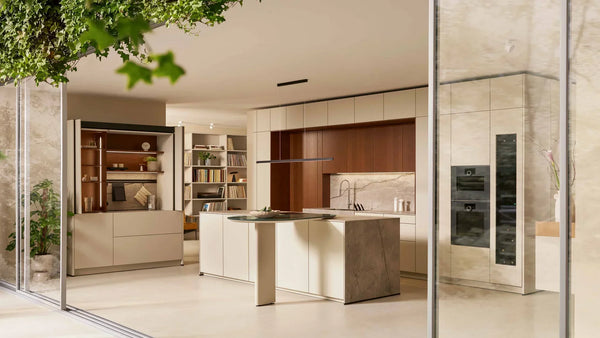
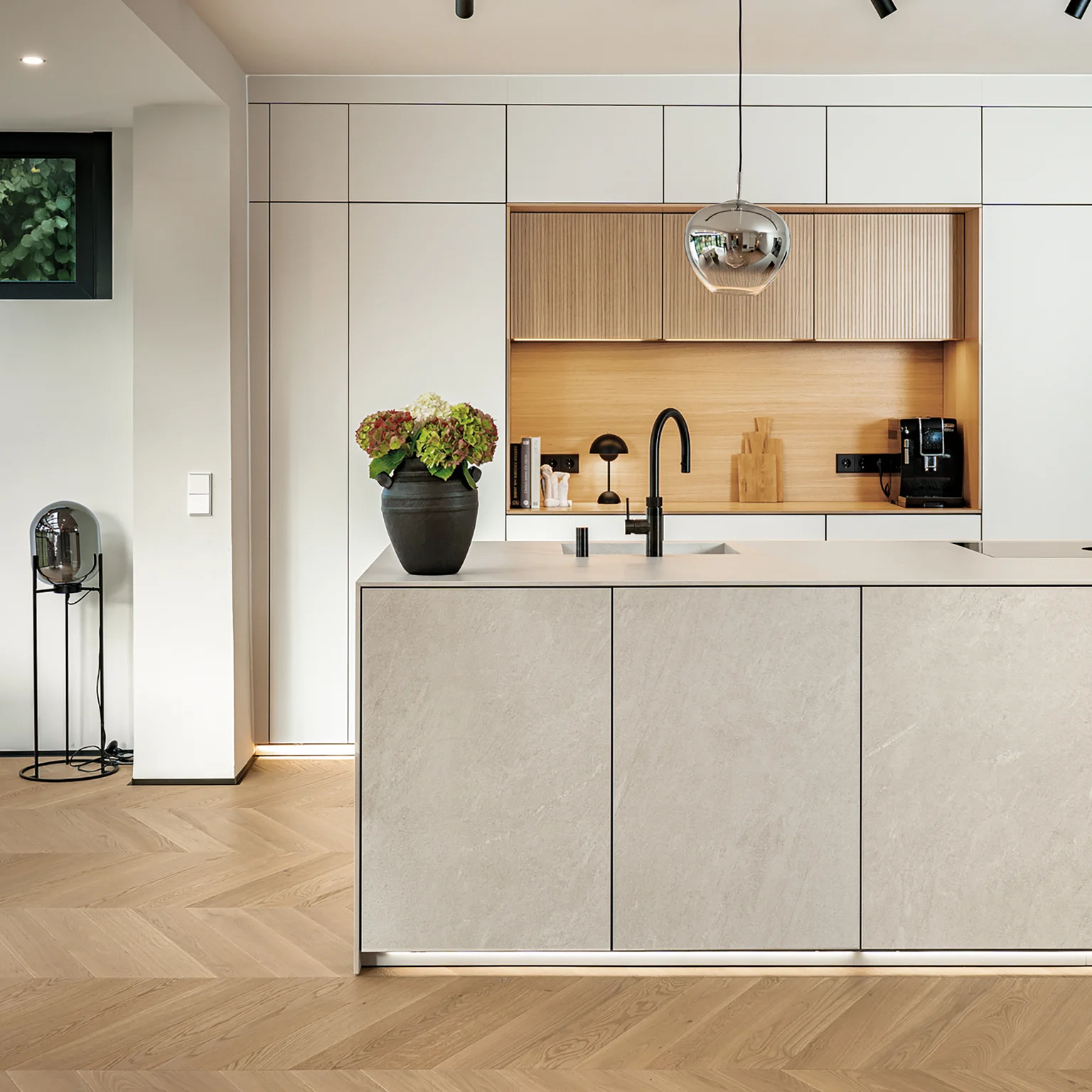
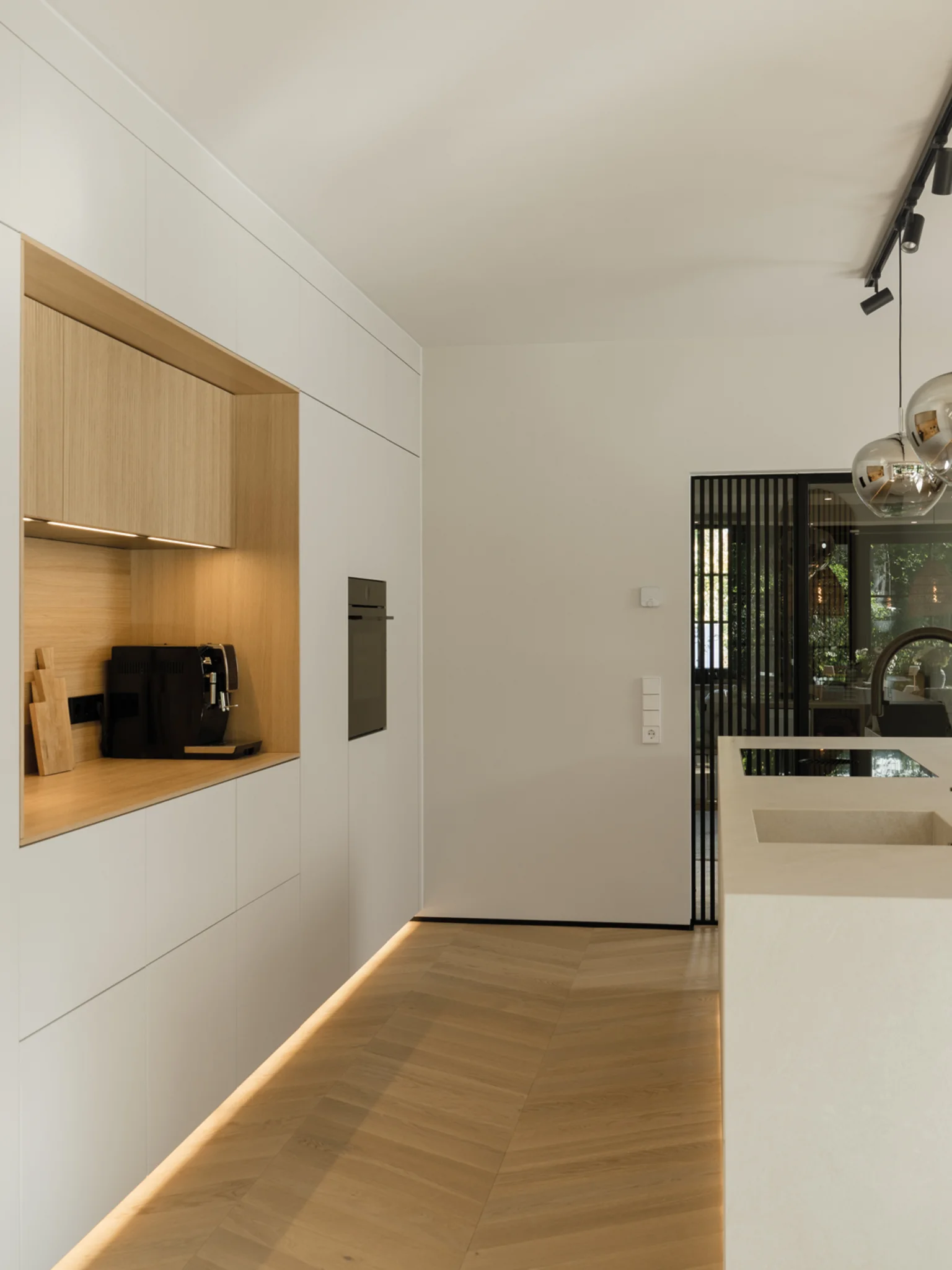
The next125 collection takes this seriously. Oak fronts in their natural grain bring exactly the warmth that Japandi requires, with a quiet texture that does not compete for attention. The shell white cabinetry recedes gracefully, letting the natural elements speak. Nothing shouts. Everything is considered.
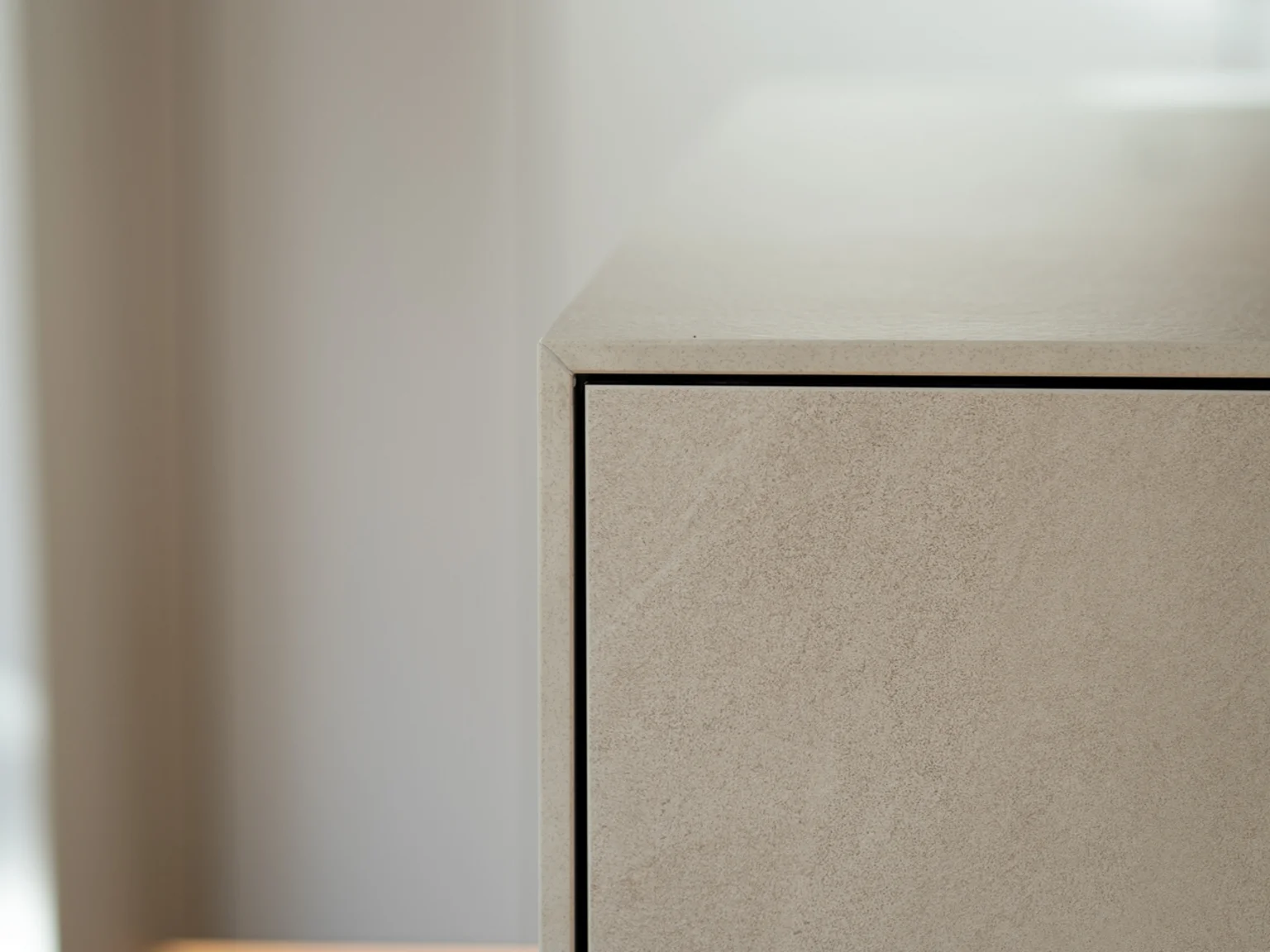
Ceramic completes the picture. For worktops and cooking islands, high-quality ceramic in tones like Bianco Beige brings a softness that stone does not always achieve. It is scratch-resistant, heat-resistant, and requires no sealing or specialist maintenance. Practical qualities that matter in a kitchen built to be used, not only admired.
The cooking island: the centrepiece done quietly
A cooking island is often where kitchen design goes wrong. It becomes a statement piece that dominates the room, breaks the calm, and ages badly. In a Japandi kitchen, the island needs to earn its presence differently: through proportion, material quality, and seamless integration with everything around it.
The next125 cooking island in Bianco Beige ceramic demonstrates what this looks like in practice. The colour sits between white and warm sand. The surface transitions are flawless. No heavy contrast edging, no decorative hardware. Its strength is in its restraint. It anchors the room without interrupting it.
The result is a kitchen where the island reads as a natural part of the whole, rather than a feature bolted into the centre. In Dubai homes where open-plan living spaces are the norm, that coherence matters enormously. You can see the full range of materials and finishes at the showroom.
Lighting as an invisible design element
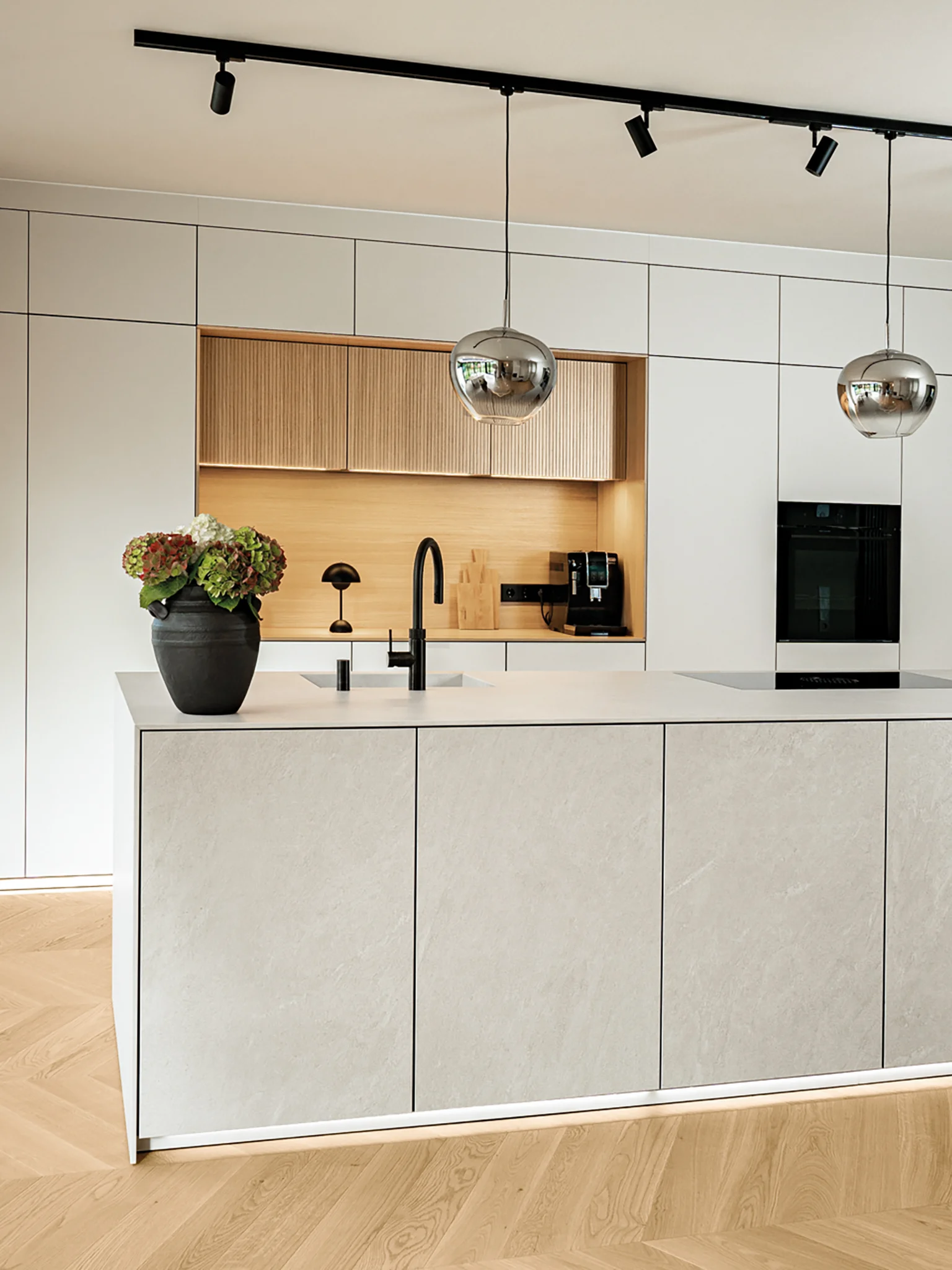
In Japandi design, lighting is not decoration. It is architecture. The goal is to reveal the room rather than perform in it: soft, indirect light that follows the geometry of the space rather than punctuating it.
Recessed lighting integrated into the wall units allows the joinery itself to glow without a visible source. Shadows fall cleanly. The grain of the oak reads differently depending on where you stand. Materials that are already excellent look even better when the light is planned with the same care as everything else.
This is what separates a well-planned German kitchen from a standard cabinet installation. The lighting is not an afterthought. It is part of the brief from the first planning session.
The coffee niche: detail as character
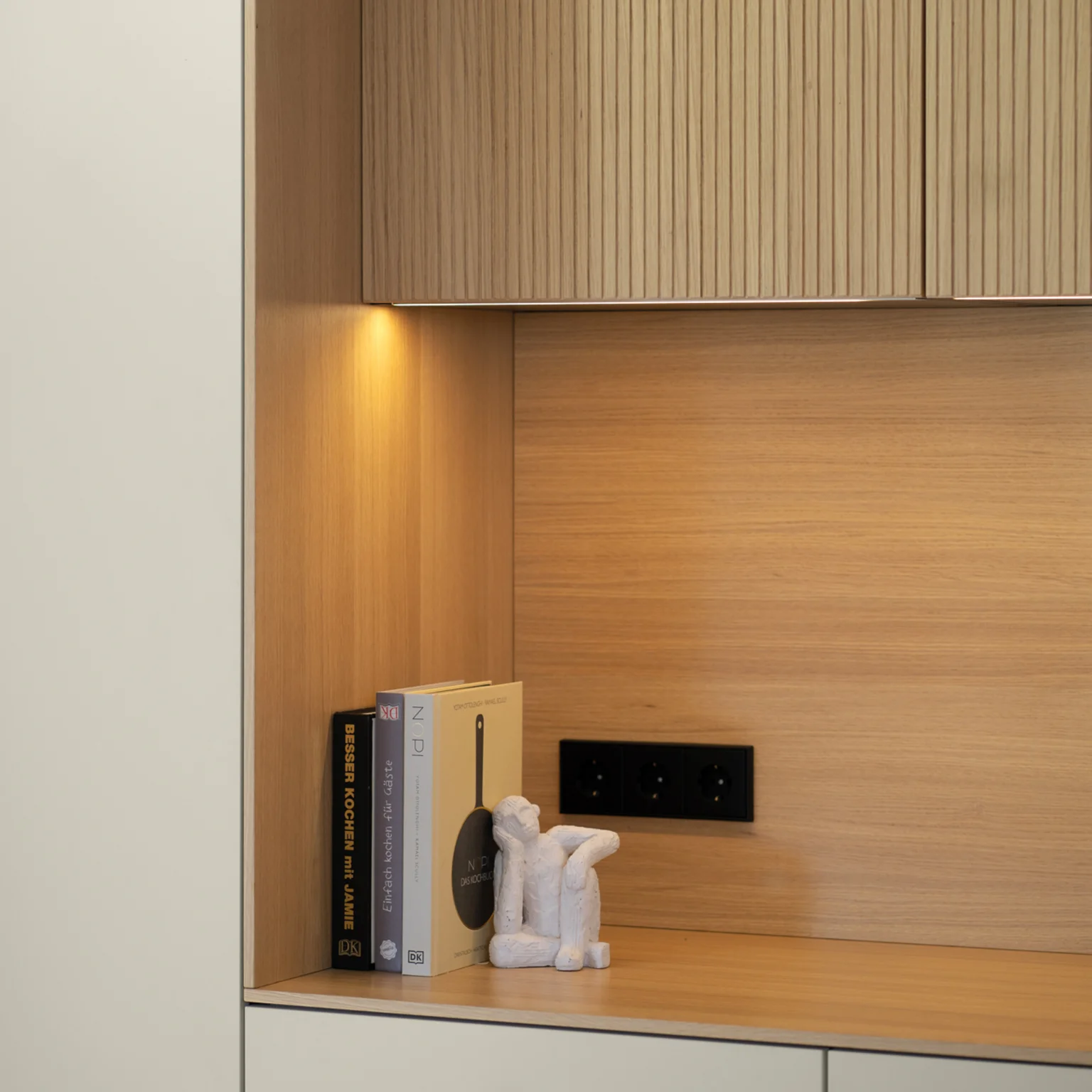
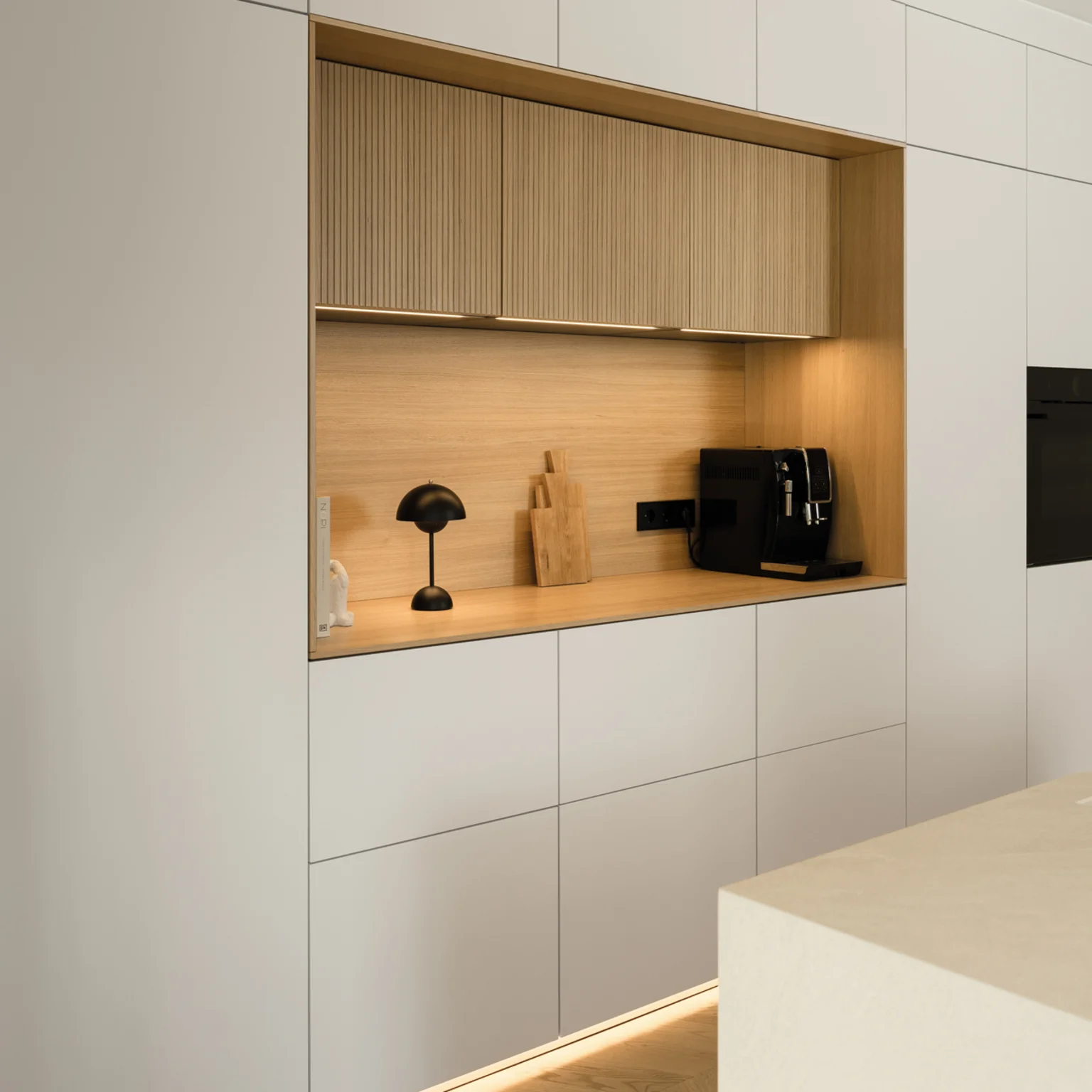
The best kitchens are full of small decisions made correctly. The coffee niche integrated into the tall unit is one of them. In natural oak, it creates a warm recess that breaks the flatness of the white cabinetry without introducing anything jarring. It is practical, room for a machine, cups, and accessories, but it reads first as a design gesture.
Alongside it, grooved fronts in light bianco oak add vertical rhythm to the wall units. The grooves are subtle. You might not notice them immediately. But they give the surfaces a texture that makes the kitchen feel hand-considered rather than specified from a catalogue.
These details are not about adding more. They are about giving each part of the kitchen its own quiet presence. In Japandi terms, this connects to the idea of wabi-sabi: natural grain, honest craftsmanship, and imperfect materials in a kitchen built for daily life.
Why Japandi works particularly well in Dubai
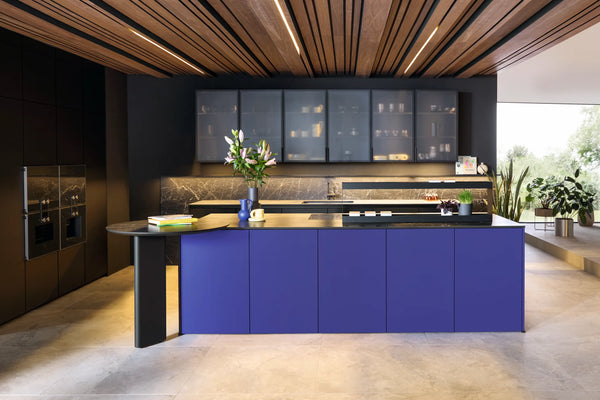
Dubai's luxury residential market tends toward the expressive. Marble, high-gloss, statement lighting, dramatic scale: these are the dominant visual languages in many homes. Japandi offers something different, and that rarity is increasingly valued by those who have already done grand and are ready for something more considered.
The material palette, ceramic, wood, white lacquer, does not fight with strong natural light or warm interior tones. The calm, neutral character of the design makes it easier to live with year-round, under both artificial and natural light conditions. In a market where so many kitchen designs in Dubai look alike, a Japandi kitchen genuinely stands apart.
Because next125 kitchens are built around a 125mm modular grid system with full planning support, the result is not tied to one particular floor plan. It adapts to a villa in Jumeirah, a penthouse in Downtown, or an apartment in Business Bay without losing its coherence.
Planning a Japandi kitchen in Dubai
The starting point is always material selection. Oak species, front profiles, ceramic tones, and the proportion of wood-to-white in the overall composition all need to be resolved together. The individual choices are simple enough. Getting them to work as a whole without any one element overbalancing the rest is the skill, and it is where an experienced kitchen design team earns its place in the process.
The next125 collection is available at the Goettling Interiors showroom in Dubai, where you can see, touch, and plan around the materials in full scale. No renderings, no guesswork. The kitchens are built, the finishes are there in front of you, and the team can take you through the planning process from concept to installation. You can also download the next125 catalogue to explore the full range.
To discuss your project, book a consultation or explore the full next125 collection.
Goettling Interiors is the authorised next125 retailer in Dubai. All next125 kitchens are manufactured in Germany and installed by our Dubai-based team.