How to Choose a Liebherr Wine Fridge
A wine fridge is easy to treat as a last-minute appliance. In a properly planned kitchen it is closer to a small cellar: temperature, humidity, light and vibration all sit inside one cabinet, and that cabinet has to look right next to the joinery. A Liebherr wine fridge is built around those conditions first. The design question is which format belongs in the room, not whether the brand can keep wine.

Long-term storage wants a steady climate around +10 °C to +12 °C. Serving is a different job. White, red and sparkling each taste better at their own temperature, which is why Liebherr splits the range into one, two and three zone cabinets. Each zone on a multi-temperature model can be set independently between +5 °C and +20 °C.
One, two or three zones
One zone behaves like a cellar. The whole cabinet holds a constant temperature, which is the right setup when bottles are ageing and you are not pouring from every shelf. Two and three zone cabinets are wine tempering fridges: they keep different styles ready to drink, rather than waiting for a bottle to come up from storage.
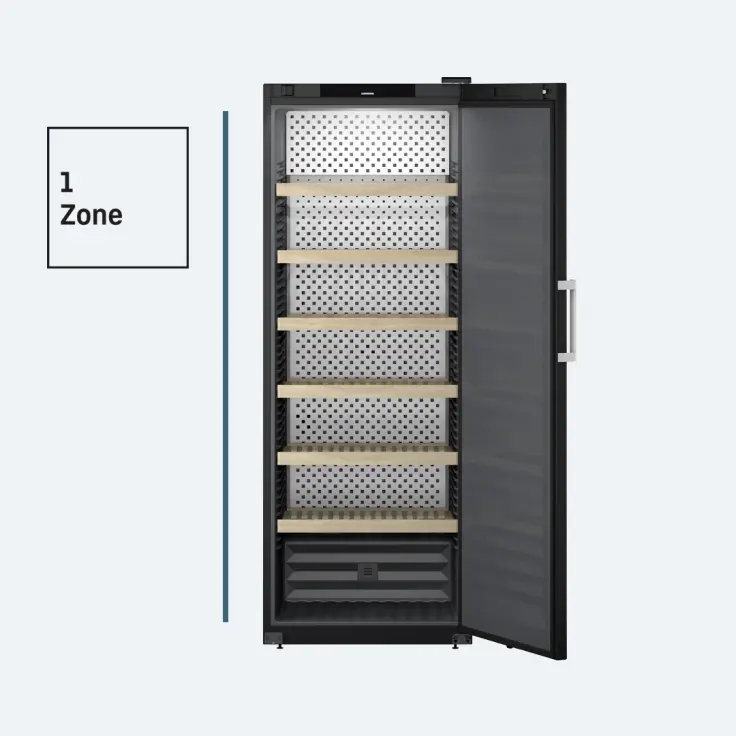
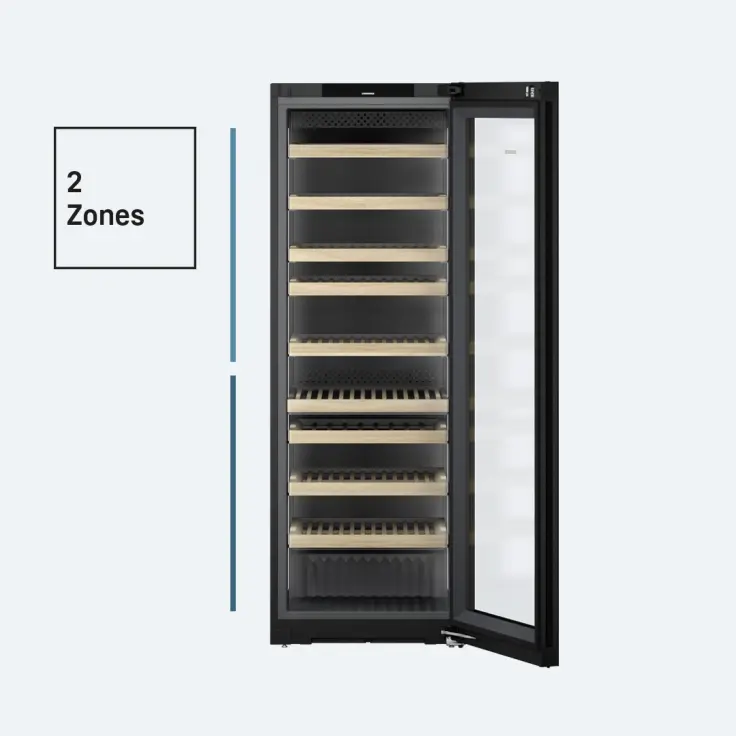
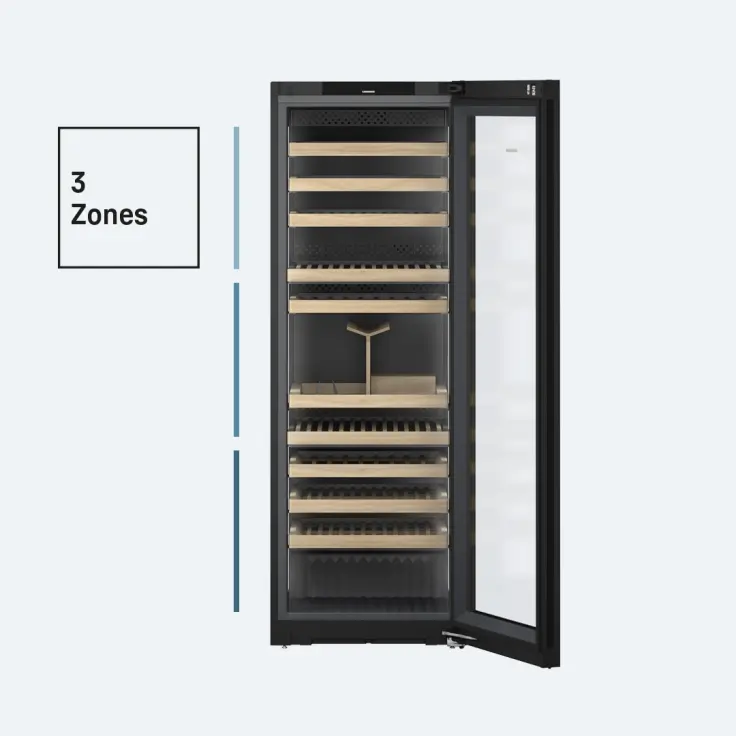
| 1 zone | 2 zones | 3 zones | |
|---|---|---|---|
| Role | Ageing and cellar storage | Red and white at serving temperature | Red, white and sparkling, ready to pour |
| Typical series | GrandCru, Vinothek | Vinidor, Vinothek | Vinidor |
| Best when | The collection is meant to rest | Dinner service is the daily use | Champagne sits next to still wine |
If the cabinet is there for hosting, two zones cover most households. Three zones earn their extra compartment when sparkling wine is part of the regular mix, not an occasional bottle. Liebherr’s Vinidor models are the ones built for that split. Built-in examples in the current collection include the EWTdf 3553 and the EWTgb 3583.
Integrated or freestanding
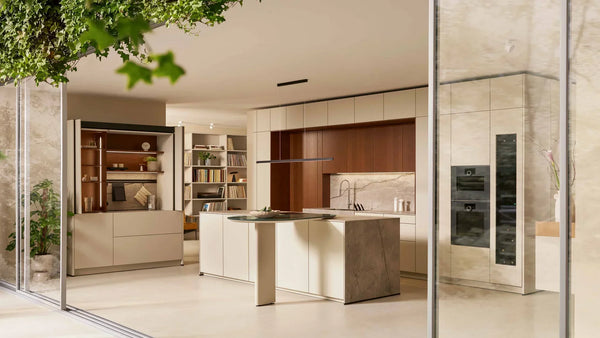
That choice is a planning decision as much as a product one. A fully integrated wine fridge disappears into a tall unit or a wall of millwork, with door styles and widths chosen to match the kitchen. Compact niches work; larger two and three zone cabinets sit in a run of built-in appliances without reading as a separate object.
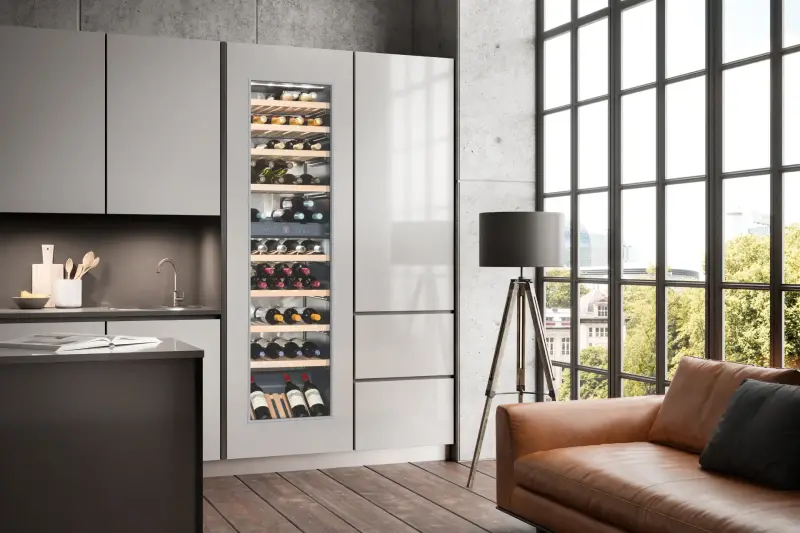
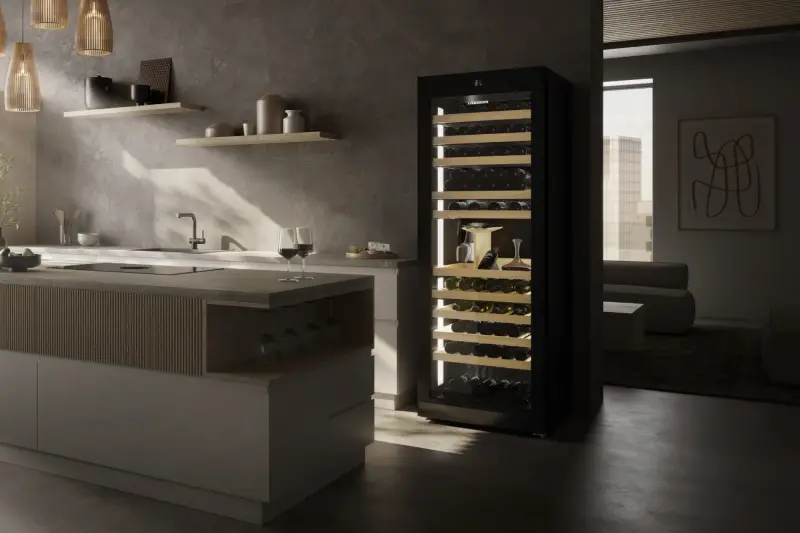
A freestanding wine fridge can live in a dining room, a bar, or a pantry where there is no cabinetry to hide it. Single zone freestanding models are especially useful when the brief is ageing rather than display. In both cases the glass door is doing two jobs: showing the bottles, and keeping UV light off them.
The climate inside the cabinet
Temperature is only the first control. Corks dry out below about 50% relative humidity, which lets oxygen into the bottle. Liebherr keeps humidity above that threshold as a baseline. On HumiditySelect models it is a two-stage setting. HumidityControl goes further, with a range from 50% to 80% RH and a display that flags when the level drops too low.
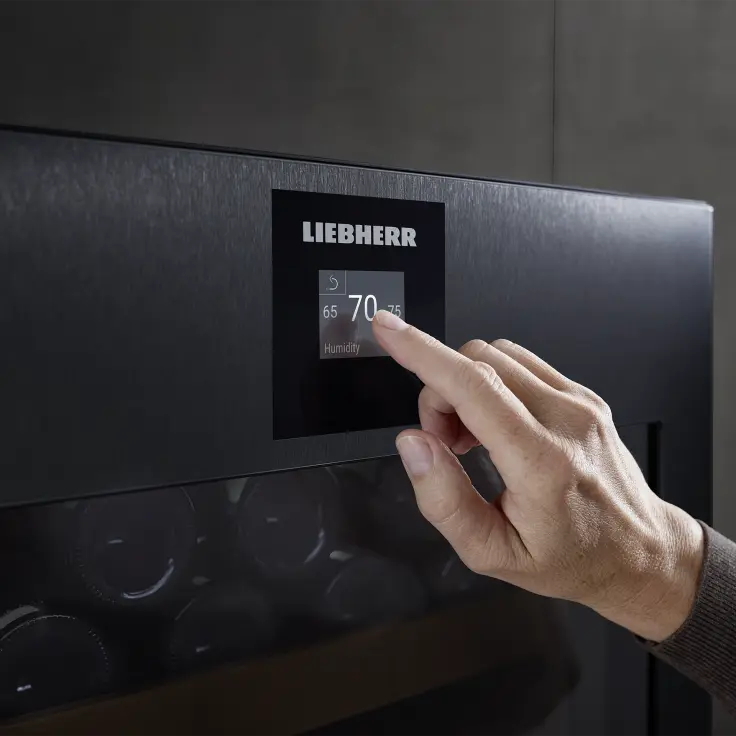

Air quality is handled with a FreshAir activated charcoal filter that binds odours from the room. The appliance reminds you to change it every six months. Shelves are natural beech, and the paints and door seals are specified without smells that could transfer to the wine. Compressors are low-vibration, which is why a Liebherr wine fridge stays quiet enough for an open-plan kitchen. SoftSystem closes the door from 45° on freestanding models and from 30° on fully integrated ones, so the climate is not dumped into the room every time someone reaches for a bottle.
| What the wine needs | What Liebherr does |
|---|---|
| Steady temperature | Electronic control with sensors, +5 °C to +20 °C on multi-zone models |
| Humidity over 50% | HumiditySelect or HumidityControl, to keep corks from shrinking |
| Clean air | FreshAir charcoal filter, replaced about twice a year |
| No vibration | Low-vibration compressors and SoftSystem door closing |
| UV protection | Insulated glass doors, two or three panes depending on the model, plus UV-free LED light |
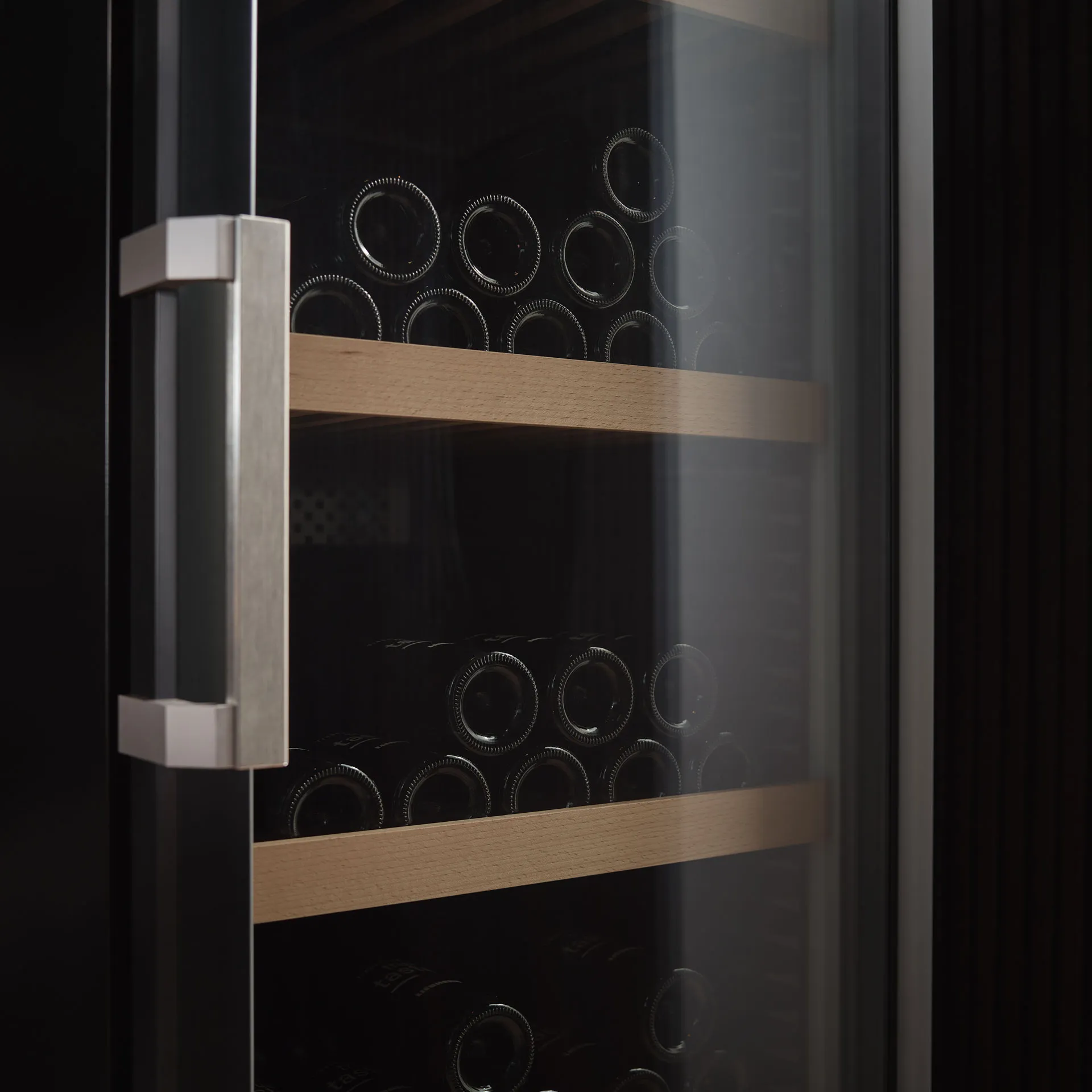
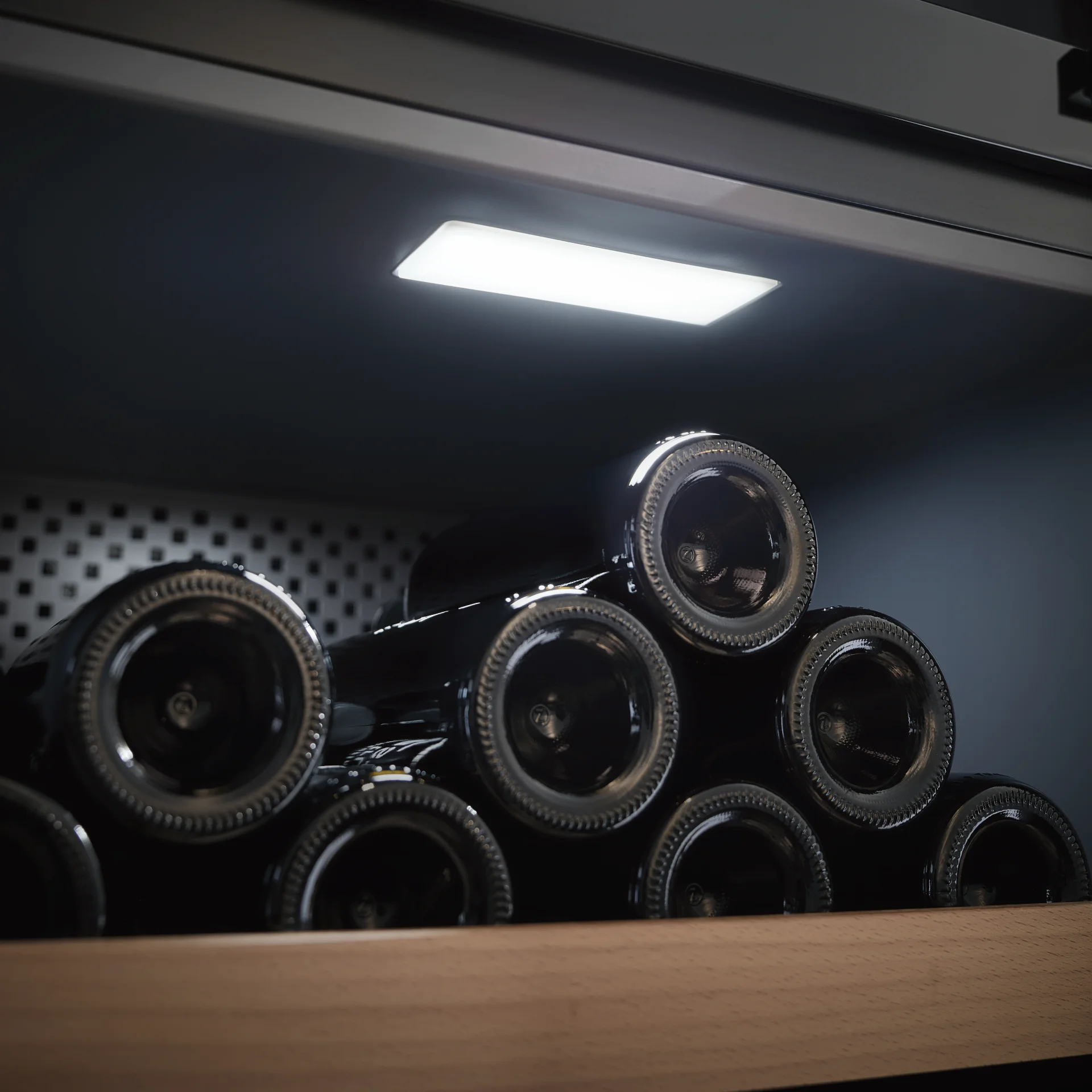
The LED lighting is there so the collection can stay on view. It produces almost no heat and none of the UV that would push a vintage along too fast. Mechanical door locks, display locks and door alarms sit on top of that, which matters in a family kitchen as much as in a collector’s store.
When the brief is closer to a cellar
Monolith wine fridges take the same climate logic up to a larger, furniture-scale cabinet, with the kind of capacity you would expect from a dedicated wine room. They are not the default for every project. They make sense when the kitchen or dining wall is meant to hold a serious collection, and when the joinery around them is being designed at the same time. One example currently listed is the EWPi 9470 Monolith.
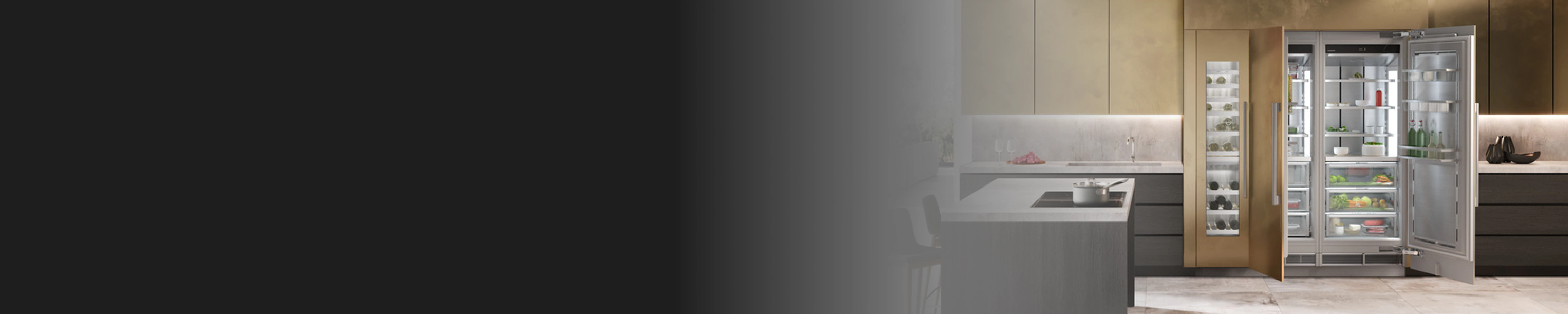
For a kitchen design that already includes a tall appliance run, start with the niche: width, door style, and whether the cabinet should vanish or stay visible behind glass. Then choose the number of zones from how the household actually drinks. The same conversation belongs in a wider kitchen renovation, next to refrigeration and the rest of the appliance specification. Gaggenau’s wine cabinets sit in a different design language if the rest of the kitchen is already on that brand.